
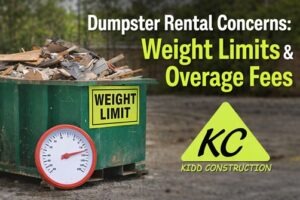
dumpster rental concerns
When people start searching for a roll-off container, one topic rises to the top almost immediately: dumpster rental concerns. Among those concerns, weight limits and overage fees are the most misunderstood. Customers planning a renovation, roof replacement, demolition, or cleanout often assume they’re paying for space alone. In reality, they are also paying for weight.
If you’re comparing options for a construction dumpster rental, this guide will help you understand how weight limits work, what triggers overage fees, and how to avoid unexpected costs. At Kidd Construction Supply, we believe transparency removes stress from the rental process. The more informed you are, the smoother your project will go.
Dumpster Rental Concerns: Why Weight Limits Matter in Dumpster Rentals
Most people focus on the size of the dumpster. Ten yards, twenty yards, thirty yards. However, weight capacity is just as important as volume. Landfills charge disposal facilities by tonnage. That means every construction dumpster rental includes a base weight allowance built into the price. Once the container is hauled to the landfill, it is weighed. If the debris exceeds the included tonnage, overage fees apply. Understanding this upfront eliminates one of the biggest dumpster rental concerns: surprise billing after pickup.
What Is Included in a Typical Construction Dumpster Rental?
Each provider structures pricing slightly differently, but most rentals include:
- Specific container size
- Set rental period
- Base weight allowance
- Delivery and pickup
For example, a 20-yard container might include two or three tons of debris. If your project produces four tons, the additional ton is billed at a per-ton rate set by the disposal facility. This structure is standard across the industry. However, confusion happens when renters assume unlimited weight is included.
Common Projects That Trigger Weight Overage Fees
Some materials are much heavier than they appear. This is where many dumpster rental concerns begin. Roofing shingles are a major example. A single layer of asphalt shingles can weigh thousands of pounds. If a roof has multiple layers, weight increases dramatically.
Concrete, brick, dirt, tile, and plaster are also extremely dense materials. A small amount can exceed the weight allowance quickly, even if the dumpster is not filled to the top. By contrast, household junk, furniture, and general construction debris tend to be lighter.
Before booking your construction dumpster rental, it is important to tell the provider exactly what type of material you will be disposing of. Accurate information helps avoid overage fees.
Dumpster Rental Concerns: How Overage Fees Are Calculated
Overage fees are straightforward. After the dumpster is picked up, it is taken to a landfill or transfer station and weighed on a certified scale.
The process works like this:
- Truck and dumpster are weighed upon arrival.
- Debris is unloaded.
- The empty truck and container are weighed again.
- The difference equals the debris weight.
If the debris weight exceeds the included allowance, you are billed for the additional tonnage at the agreed rate. This is not an arbitrary charge. It is based on documented landfill scale tickets. Knowing this removes one of the most common dumpster rental concerns about fairness.
How to Estimate Debris Weight Before Renting

Dumpster rental
Estimating weight may feel complicated, but experienced providers can guide you.
Here are some general guidelines:
- Asphalt shingles: approximately 250 to 400 pounds per square
- Concrete: about 4,000 pounds per cubic yard
- Drywall: around 500 pounds per cubic yard
- Household debris: roughly 150 to 300 pounds per cubic yard
These numbers vary, but they offer a starting point. If you are unsure, explain your project in detail when booking your construction dumpster rental. Professionals at Kidd Construction Supply can recommend the right size and weight allowance based on experience with similar jobs.
The Difference Between Volume Limits and Weight Limits
Another source of dumpster rental concerns is confusion between filling a dumpster and overloading it.
There are two types of limits:
- Volume limit: You cannot fill the dumpster above the top rail. Debris must remain level for safe transport.
- Weight limit: You cannot exceed the included tonnage without paying overage fees.
A dumpster may appear half full but still be overweight if the material is dense. Conversely, it may be completely full but remain within weight limits if debris is light. Understanding this distinction protects you from unexpected charges.
Tips to Avoid Overage Fees
Avoiding overage fees requires planning. Here are practical steps that make a difference:
- Be honest about your materials. Underestimating debris weight causes most billing surprises.
- Choose the right container size. Sometimes a larger dumpster includes a higher weight allowance, which reduces risk.
- Separate heavy materials. If disposing of concrete or dirt, consider a dedicated container specifically rated for heavy debris.
- Avoid mixing dense materials with general construction waste. This can push the total weight above limits quickly.
- Communicate changes. If your project scope expands, notify your rental provider before pickup.
These proactive steps significantly reduce dumpster rental concerns related to cost overruns.
Why Transparent Pricing Matters
Clear pricing eliminates confusion. A reputable company will explain:
- Included weight allowance
- Per-ton overage rate
- Rental duration
- Restricted materials
At Kidd Construction Supply, our goal is to provide straightforward pricing for every construction dumpster rental. When customers understand how weight works, they make smarter decisions and avoid frustration.
Dumpster Rental Concerns: What Materials May Be Restricted
Weight is not the only factor. Certain materials are restricted due to environmental regulations. Common restricted items include:
- Hazardous chemicals
- Paint and solvents
- Tires
- Batteries
- Asbestos
These items require specialized disposal. Attempting to include them in a standard dumpster can result in additional fees or refusal at the landfill. Addressing these details early prevents added dumpster rental concerns later in the process.
Construction debris tends to be denser and more uniform. Home cleanouts often include bulky but lighter items. For example, a renovation that includes tile removal, drywall demolition, and lumber disposal will weigh significantly more than clearing out old furniture and household clutter. This is why selecting the correct construction dumpster rental option is essential. The type of job matters as much as the size of the container.
Dumpster Rental Concerns: The Role of Local Regulations
Local landfill rules can influence weight pricing and disposal fees. These regulations affect hauling costs and tipping fees.
A knowledgeable local provider understands these requirements and incorporates them into pricing. This reduces uncertainty and addresses dumpster rental concerns tied to compliance.
Why Customers Worry About Overage Fees
Most customers worry about two things:
- Unexpected costs
- Lack of clarity
When a rental provider fails to explain weight limits clearly, customers assume the worst. However, with transparent communication, overage fees become predictable and manageable. At Kidd Construction Supply, we prioritize clear explanations so clients know exactly what to expect before delivery.
If you are managing a renovation timeline, roofing project, or demolition job, scheduling matters. Avoid waiting until the dumpster is nearly full to think about weight. Instead, discuss your expected debris volume in advance. Early planning reduces stress and minimizes dumpster rental concerns that arise from rushed decisions.
Choosing the Right Partner for Your Construction Dumpster Rental
Experience makes a difference. A reliable dumpster rental supplier understands construction projects, landfill requirements, and realistic debris estimates. When working with Kidd Construction Supply, customers receive guidance tailored to their specific project. Whether you are replacing a roof, remodeling a kitchen, or managing a full construction build, our team helps you choose the right container with appropriate weight allowances.
Clarity builds trust. And trust eliminates most dumpster rental concerns before they start. Are you ready to rent with confidence? If weight limits and overage fees have been holding you back, it’s time to get clear answers. A properly planned construction dumpster rental does not have to come with surprises.
Call Kidd Construction Supply today at 843-399-1515 to discuss your project. Our team will walk you through weight allowances, pricing, and container options so you can move forward confidently and stay on budget.
Make your next rental simple, transparent, and stress-free.
Kidd Construction Supply
1057 Redi Mix Rd
Little River, SC 29566
(843) 399-1515
https://www.kiddconstructionsupplies.com/
Areas Served:
Carolina Forest, Little River, Myrtle Beach, North Myrtle Beach